
Add Row
Add Element
lmr logo
update

 LMR 
Local Online Marketing
For Small Business

update
Add Element
  • Blog Categories
    • Custom Mobile App
    • online marketing
    • Create A 5 Star Reputation
    • Local Digital Marketing
    • search engine marketing
    • social media marketing
    • Web Design
    • Content Marketing
    • Video Marketing
    • Email Marketing
  • Home
June 27.2025
1 Minute Read

Small Business Digital Transformation: Start Your Journey

Did you know that over 70% of small businesses report revenue growth after implementing digital transformation strategies ? If you’re a business owner or manager, this statistic is a wake-up call: small business digital transformation is no longer a luxury—it's a necessity. In this comprehensive guide, you’ll discover why embracing digital tools, reimagining customer experiences, and reshaping your business model are critical to thriving amidst fierce competition and changing customer demands. Dive in to see how your business can accelerate growth and stay ahead of the curve.

Embracing Small Business Digital Transformation: Why Now is the Time

  • Did you know that over 70% of small businesses report revenue growth after implementing digital transformation strategies? Discover why small business digital transformation is a non-negotiable pathway to growth and competitive advantage in the modern marketplace.

Embracing small business digital transformation is more vital today than ever before. The world is moving rapidly toward a digital-first economy, and businesses of every size—especially small and medium enterprises—need to adapt. Consumer habits have shifted online, competitors are investing in digital tools, and even local businesses face global competition through e-commerce and social media. Ignoring these shifts could mean missing out on opportunities, losing customer relevance, or facing operational inefficiencies.

It’s not just about adopting new technologies. Small business digital transformation involves a holistic review of how you serve customers, optimize internal business processes, and position yourself in a digital marketplace. The businesses that invest in change not only see improvements in customer satisfaction but also unlock avenues for innovation and growth that didn’t exist before. Now is the time to get proactive—your competitors already are.

Whether you’re just starting your digital journey or looking to amplify results, understanding the what, why, and how of transformation for small businesses will give you a decisive edge. Let’s break down what digital transformation really means for you.

inspiring small business owners reviewing digital reports on tablets and laptops in a modern office, small business digital transformation

Understanding Small Business Digital Transformation: What It Means for Small Businesses

Defining Digital Transformation for Small Business Success

Small business digital transformation is the process of integrating digital technologies—like cloud computing, automation software, and online collaboration tools—into every aspect of your business. It’s not just about purchasing the newest tool or system; it’s about reimagining your operations, moving manual or paper-based processes online, and using digital technology to create real value for your customers. For business owners, this could mean anything from launching an e-commerce site, upgrading your accounting system, or embracing social media marketing as a main sales channel.

Successful digital transformation for small businesses involves strategically realigning business models, processes, and culture. It’s about making data-driven decisions, streamlining workflows, and expanding your reach in ways that were impossible before the digital era. Ultimately, it empowers business owners to meet customers where they are—often online—and deliver seamless customer experiences from the first interaction to post-sale support.

Think of digital transformation as a journey, not a destination. Every new digital step—from automating invoices to leveraging customer data analytics—builds a stronger, more agile business ready to embrace new challenges and opportunities.

Key Drivers Accelerating Transformation for Small Business

  • Customer expectations
  • Operational efficiency
  • Market competitiveness
  • Innovation

Several key factors are driving the surge in digital transformation for small businesses . First, customer expectations are evolving at breakneck speed. Today’s consumers want fast, personalized, and convenient experiences—whether ordering products online or booking services through an app. Meeting these expectations requires adopting digital tools that enable 24/7 access, real-time support, and personalized service.

Operational efficiency is another major driver. Digital systems like cloud computing and workflow automation can save countless hours on repetitive business processes, freeing up staff to focus on higher-value tasks and customer engagement. This not only boosts productivity but also helps control costs and reduce errors.

Market competitiveness and innovation round out the list. As more competitors move online and leverage emerging technologies, standing still is no longer an option. The businesses willing to experiment with new digital models, invest in digital skills for their teams, and harness business analytics will be the ones that stand out in a crowded market.

How Digital Transformation Impacts Small Businesses and Small and Medium Enterprises

Digital transformation impacts small businesses and small and medium enterprises (SMEs) across every facet of operations. The integration of digital tools reshapes how you attract, serve, and retain customers. With real-time insights from data analytics, you can understand customer behavior, tailor offerings, and make informed decisions that outpace rivals. Automation tools simplify tedious business processes, leading to more time for innovation and personal service.

Adopting digital technologies also opens up new revenue streams. E-commerce platforms let small retailers reach customers beyond their immediate locales, and cloud computing makes enterprise-grade software accessible and affordable. Most importantly, digital transformation fosters adaptability, helping small businesses swiftly respond to changes in market trends or customer needs.

“Businesses that embrace digital change are twice as likely to increase profitability.” – Industry Report

This shift toward digitally enabled business models is about much more than keeping up—it’s about thriving in a world where relevance and responsiveness define success. SMEs that prioritize transformation for small businesses set themselves up for increased growth, profitability, and long-term resilience.

Core Pillars of Small Business Digital Transformation: A Comprehensive Framework

The Five Main Areas of Digital Transformation for Small Business

Areas Key Processes Example Technologies
Customer Experience CRM Integration, Personalization Salesforce, HubSpot
Business Model Innovation Online Services, E-commerce Shopify, Wix
Data Analytics Performance Monitoring Google Analytics
Operational Efficiency Automation Zapier, QuickBooks
Digital Culture Workforce Training Online Learning Platforms

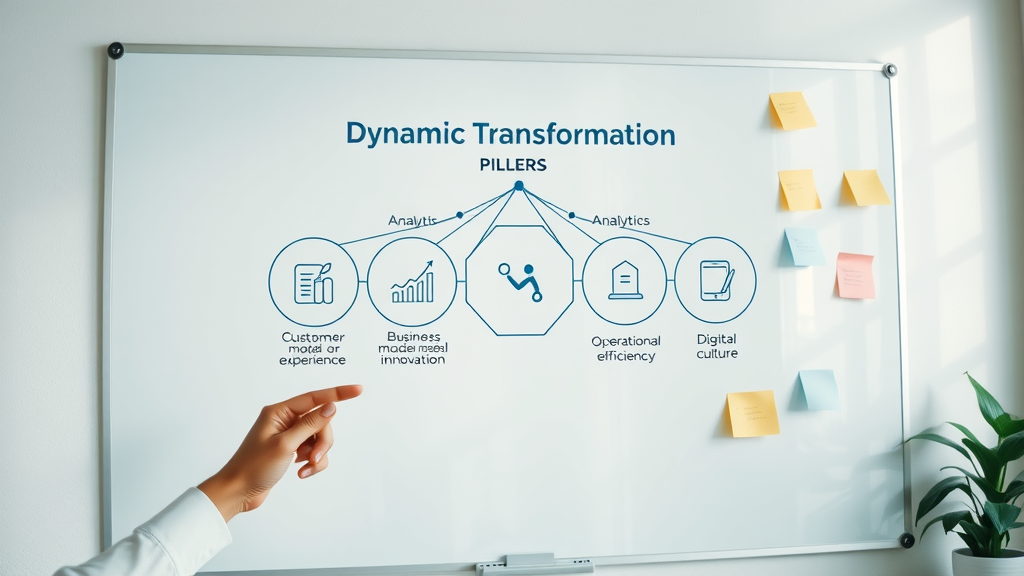
infographic showing five digital transformation pillars for small business digital transformation

The core pillars of small business digital transformation provide a practical framework for success. Focusing on Customer Experience , it’s vital to use CRM systems and personalization tools for better customer engagement and loyalty. Business model innovation enables small and medium businesses to sell online or offer digital services, broadening market reach and adaptability.

Data analytics drive smarter decisions, allowing business owners to rapidly respond to trends, streamline business processes, and identify opportunities for innovation. Improved operational efficiency is attainable through digital automation, reducing friction in workflows and maximizing productivity. Finally, embedding a digital culture—through staff training and leadership advocacy—ensures new systems and mindsets are adopted seamlessly across your organization.

Anchoring your digital transformation to these five main areas increases your odds of a successful digital strategy that grows with you. Each pillar supports a flexible, resilient, and innovative business model capable of sustaining growth in a digital-first world.

Exploring the Four Pillars of Digital Transformation for Small Businesses

  • Technology Adoption
  • Digital Processes
  • People-Centric Change
  • Customer Experience Excellence

The four pillars of digital transformation —technology, process, people, and customer experience—form the foundation for long-term business evolution. Technology adoption means more than investing in the newest software; it’s about strategically integrating tools that genuinely meet your specific business needs and align with your vision.

Transforming digital processes involves mapping existing workflows and identifying opportunities for automation and simplification. People-centric change acknowledges that your team is at the heart of every successful digital initiative. Investing in workforce training, facilitating buy-in, and nurturing a growth mindset are key to smooth implementations.

Finally, customer experience excellence should be the north star for every new digital system or product launch. Keep customer interactions at the core—whether you’re improving response times, offering self-serve options, or personalizing product recommendations. Building your strategy on these four pillars helps accelerate transformation for small businesses from concept to reality.

The 3 P’s of Digital Transformation: Process, People, Product

At the core of every thriving small business digital transformation strategy are the 3 P’s: Process, People, and Product . Process optimization means reviewing business workflows to eliminate inefficiencies and align them with digital capabilities. People refer to your staff and leadership—training, communicating, and securing their buy-in ensures change happens productively and with minimal resistance.

The product component focuses on what you offer customers. Digital transformation may mean upgrading your service with online booking, developing an app, or expanding your product catalog to an e-commerce platform. By honing in on these three elements, small and medium enterprises can achieve a flexible, customer-focused digital presence, laying the foundation for continued evolution.

Successful digital transformation for small businesses happens when business owners treat the 3 P's as interconnected: strong processes support empowered people who deliver innovative products and services to customers.

Why Small Business Digital Transformation Matters: Benefits for Small Businesses

Transforming Customer Experience Through Small Business Digital Strategies

One of the most tangible benefits of small business digital transformation is the profound upgrade to the customer experience. With tools like CRM systems, personalized marketing automation, and digital communication channels, small businesses can deliver faster, more convenient, and highly customized customer interactions. Such enhancements turn occasional buyers into loyal advocates, raising customer satisfaction and lifetime value.

For instance, a business that introduces an online scheduling system instantly meets today’s customers where they expect—offering flexibility, reducing human error, and enabling more touchpoints for engagement. These changes are not just technological—they fundamentally reshape how businesses create and maintain lasting relationships with their clients.

Whether it’s streamlining social media responses or providing self-service portals, elevating the customer experience promotes differentiation in competitive markets and underpins sustainable business growth.

Boosting Operational Efficiency with Business Digital Tools

small business team using workflow automation software for small business digital transformation

Integrating digital tools like cloud-based accounting, project management platforms, and workflow automation frees small businesses from time-consuming manual business processes. These tools help to standardize task management, track performance, and reduce overhead costs, making overall operations smoother and more reliable. With automated data analytics, you can instantly identify what’s working and where resources should be focused.

Operational efficiency isn’t just about working faster—it’s about working smarter. Small business owners can reallocate staff to customer-facing activities, stimulate innovation, and scale product and service offerings without escalating expenses. In a digital economy, optimizing business process workflows is the surest route to long-term resilience and successful digital results.

Tapping into business digital solutions also supports compliance and data security, helping owners safeguard sensitive information while ensuring business continuity.

Unlocking Innovation with Digital Transformation for Small Business

Embracing digital transformation for small business unlocks unprecedented innovation. By leveraging new digital technologies such as business analytics tools, AI, or e-commerce solutions, even the smallest ventures can rapidly test and launch new products, adapt to consumer feedback, and experiment in previously inaccessible markets.

Digital transformation removes barriers to entry posed by traditional storefronts, rigid business models, and manual processes. Cloud computing and online platforms democratize access to enterprise-grade tools, giving small and medium enterprises greater power to compete with industry giants.

“Digital transformation for small business isn’t just about technology—it’s about survival, relevance, and growth.” – Digital Adoption Expert

For business owners ready to innovate, digital transformation offers a dynamic toolkit to relentlessly pursue fresh ideas and keep their brands at the forefront of customer expectations.

Common Barriers to Effective Small Business Digital Transformation

Budget Constraints and Resource Limitations in Small Businesses

One of the most cited challenges in small business digital transformation is budget limitations. Many small business owners worry about the up-front costs—both in money and time—of new technologies and digital systems. Managing recurring software subscriptions, training staff, and potentially overhauling existing processes can be daunting, especially for businesses with slim margins.

Resource constraints don’t just mean money. Finding staff with IT expertise, managing day-to-day operations during system migrations, and choosing the right solutions from a crowded vendor landscape add layers of complexity. Small and medium businesses must approach digital investments strategically, ensuring that each outlay delivers measurable business value.

To overcome these obstacles, many successful digital transformations start small—piloting changes in one area (such as automating invoicing) before broadening transformation projects. This staged approach allows for early wins, learning, and reinvestment into future digital upgrades.

Change Management and Workforce Adaptation

Implementing digital transformation for small businesses is not only a technical journey but a human one. Employees accustomed to established routines may fear job loss, productivity disruptions, or simply the stress of learning new systems. This resistance can slow or even derail transformation efforts if not addressed proactively.

Successful change management involves clear communication, setting realistic expectations, and investing in staff training and upskilling. Leaders must actively promote a culture of learning, openness, and experimentation, signaling that digital transformation is about growth and opportunity, not just cost-cutting.

Involving staff early in the transformation process increases buy-in, harnesses valuable feedback, and helps to identify process gaps others may overlook. A workforce ready to learn and adapt is the secret weapon of successful digital transformation for small businesses.

Managing Data Security and Compliance Challenges

As digital transformation expands digital footprints, data security and compliance challenges intensify. Moving sensitive business information to cloud systems and adopting third-party digital tools can expose small businesses to new cyber risks. Compliance with privacy regulations—such as GDPR or local data protection laws—becomes a pressing concern, particularly for those managing customer or payment data.

Lack of IT expertise, uncertain ROI, and a complex vendor landscape can create additional headaches. Business owners must thoroughly assess vendor reputations, ask about security protocols, and ensure all digital systems are regularly updated and patched.

  • Lack of IT expertise
  • Resistance to change
  • Uncertain ROI
  • Complex vendor landscape

Effective risk management in the transformation for small business requires a proactive approach: prioritize secure platforms, educate your team, and make data protection a central component of your digital transformation journey.

Step-by-Step Guide: Starting Your Small Business Digital Transformation Journey

Assessing Your Current Digital Maturity and Gaps

entrepreneur completing digital maturity self-assessment for small business digital transformation

Before launching a small business digital transformation project, it’s critical to evaluate your current digital maturity. This means honestly appraising which systems and tools you already use (e.g., cloud storage, accounting software, CRM platforms), how integrated and efficient your workflows are, and where major pain points exist. Consider areas like customer experience, sales processes, inventory management, and marketing effectiveness.

Conduct a gap analysis: where do manual or outdated processes slow things down? What tasks could be automated, and where is customer frustration highest? Are you leveraging data analytics to drive decisions, or are insights buried in spreadsheets? Start with a simple checklist—covering hardware, software, data management, and staff digital skills—to highlight opportunities for improvement.

Understanding your digital maturity level provides clarity for prioritizing the transformation process and allocating budget effectively. It also positions you for quick wins and lower-risk digital investments as you chart your path forward.

Setting Clear Goals for Transformation for Small Business

With your digital strengths and weaknesses mapped, it’s time to set clear, actionable goals. Are you looking to increase sales through an e-commerce channel? Improve email marketing effectiveness? Reduce manual order entry with automation? Pinpointing your objectives will ensure each step in your transformation for small business is purposeful and measurable.

Align these goals with broader business priorities—such as customer retention, operational efficiency, or revenue growth. Make targets specific and time-bound (e.g., reduce processing time for customer orders by 40% within six months) so you can accurately measure progress and ROI. Involving stakeholders across your organization in the goal-setting phase ensures buy-in and realistic plans.

Remember: transformation is a journey, so celebrating milestones and adjusting plans based on real-world results will keep momentum strong and teams motivated.

Prioritizing Digital Initiatives Aligned With Your Business Model

Not all digital tools or systems are right for every business. Carefully prioritize initiatives that align with your core business model and customer needs. Start with those that remedy your most significant pain points or offer the greatest strategic advantage. For a retailer, this might be launching an e-commerce shop; for a service business, it could be automating appointment bookings or implementing a CRM system to enhance customer interactions.

Evaluate initiatives based on their impact, feasibility, and potential to deliver quick results. Use ROI projections to support your choices—sometimes the least “flashy” change, like digitizing inventory management, generates outsized gains over time. Collaborate with your team to ensure all perspectives are considered before making final decisions.

A focused, phased approach to transformation for small businesses avoids overwhelm and positions your team for steady, sustainable progress.

Choosing the Right Technologies for Digital Transformation for Small Businesses

Selecting digital technologies can be overwhelming, given the crowded marketplace of software and solutions. Begin by mapping needs identified in your assessments and goals, then explore tools built specifically for small and medium enterprises. Look for solutions with strong vendor support, intuitive interfaces, and scalable features that grow with your business.

Leverage free trials, seek peer recommendations, and read user reviews to compare platforms like cloud accounting, CRM, social media schedulers, and project management tools. Don’t overlook integration: the best digital transformation for small business solutions seamlessly connect with your existing systems for unified data and workflows.

Plan for future needs as well. The right solutions should empower your team, facilitate compliance, and maintain data security as your business expands its digital presence.

Building a Change-Ready Culture in Small and Medium Enterprises

Change-readiness is the cultural foundation for lasting digital transformation for small businesses. Instilling a growth mindset and an openness to new digital systems takes leadership, communication, and consistent training. Business leaders should model adaptability and champion fresh ideas, turning transformation efforts into shared victories rather than top-down mandates.

Facilitate regular skills workshops and provide access to online courses or industry certifications. Recognize and reward early adopters who champion digital initiatives in their teams. Consistent messaging—about both opportunities and challenges—helps staff see technology adoption not as a threat, but a chance to learn, grow, and deliver better customer experiences.

Ultimately, culture powers execution: the more engaged your staff, the smoother and more successful your transformation process will be.

Measuring Success: Key Performance Indicators for Small Business Digital Transformation

Essential KPIs Every Small Business Should Track

KPI Description Digital Tools
Customer Satisfaction Scores Measures customer experience quality NPS Tools
Revenue Growth Rate Tracks financial success post-transformation Accounting Software
Process Efficiency Assesses gains in operations Workflow Automation
Adoption Rate Employee & tech usage stats System Analytics

Tracking the right key performance indicators (KPIs) is the only way to know if your small business digital transformation is truly delivering results. Customer Satisfaction Scores reveal how well changes are received. Revenue Growth Rate quantifies profitability improvements after adopting digital strategies. Process Efficiency measures reductions in time, errors, and labor, courtesy of automated digital systems. Adoption Rate shows whether your staff and customers are fully embracing new tools and workflows.

Modern digital tools—like NPS survey apps, cloud-based accounting, workflow trackers, and system analytics platforms—make collecting, visualizing, and comparing these KPIs simpler than ever. Set benchmarks before you begin, then track regularly to identify new opportunities or course-correct where necessary.

Incorporating these KPIs into regular performance reviews keeps your organization focused on ongoing improvement and transformation for small business goals that matter.

Case Studies: Real-World Examples of Digital Transformation for Small Businesses

How a Local Retailer Leveraged E-commerce for Transformation

local retail store owner checking online orders for small business digital transformation

Consider the story of a local clothing retailer who faced dropping foot traffic and needed a new growth strategy. By embracing an e-commerce platform (Shopify), integrating with a cloud inventory management tool, and promoting products via social media, sales began to rebound. Digital transformation for small business allowed the retailer to reach customers outside their city and offered curbside pickups and delivery options previously unimaginable in their model.

Not only did these changes improve customer satisfaction by offering flexibility and convenience, but they also provided data analytics for smarter purchasing and demand planning. Staff roles shifted from in-store sales to digital marketing and order fulfillment, showcasing the power of process and people transformation in achieving tangible results.

This retailer’s experience illustrates how small businesses can not only survive but thrive by embracing digital business models, leveraging digital tools, and focusing on customer experience innovation.

A Service-Based Small Business Drives Growth with Data Analytics

Let’s look at a boutique home cleaning service that traditionally relied on word-of-mouth referrals. By implementing a simple CRM and automated booking platform, they gained visibility into customer preferences and tracked service quality over time. Analyzing customer data revealed high-value clients and which marketing efforts produced the best ROI.

The owner refined their service offerings, introduced loyalty discounts to retain high-value customers, and streamlined business processes through workflow automation. Revenue and repeat business increased, and glowing online reviews attracted new leads. The adoption of data analytics and digital scheduling tools not only improved operational efficiency but also reshaped the business model to put customer experiences front and center.

This case demonstrates how even small and medium businesses in service industries can differentiate themselves, boost growth, and improve customer experience with strategic digital transformation.

Selecting the Right Partners: Vendors and Solutions for Business Digital Growth

Evaluating Technology Partners for Small Business Digital Transformation

small business owner and consultant discussing digital strategy for small business digital transformation

Choosing the right vendor is a pivotal decision in your small business digital transformation journey. Evaluate potential partners based on their experience with small and medium enterprises, client testimonials, and support offerings. Look for a proven track record in your industry and openness to customization, not just one-size-fits-all products.

Assess total cost of ownership: include initial setup, training, software subscriptions, and ongoing support. Make security, scalability, and interoperability with your existing systems top priorities. Whenever possible, ask for case studies, pilot programs, or references to ensure confidence before committing.

Building strong relationships with your technology partners means they’re invested not just in selling software, but in your business’s ongoing transformation for small business success.

Top Recommended Tools for Small Businesses Embarking on Transformation

  • CRM Solutions
  • Cloud Storage
  • Online Marketing Platforms
  • E-commerce Builders
  • Automation Tools

CRM Solutions help manage leads and nurture customers. Cloud storage ensures secure, accessible data from anywhere. Online marketing platforms (like social media management and email marketing software) allow you to reach and nurture your audience automatically. E-commerce builders make launching an online store fast and cost-effective. Automation tools streamline tedious tasks like invoicing, tracking orders, and customer follow-ups—freeing staff for higher-value work.

The best solutions will depend on your specific business model and growth goals, but a digital transformation for small business approach means regularly reviewing and updating your tech stack for maximum impact.

“Selecting the right digital partner is the cornerstone of successful digital transformation for small businesses.” – Tech Consultant

Sustaining Success: Ensuring Continuous Improvement After Digital Transformation

Cultural Shifts in Small Businesses Post-Transformation

Transformation doesn’t end at implementation. Small businesses that excel embrace a culture of continuous improvement—encouraging innovation, open feedback, and regular reevaluation of digital tools and processes. Leaders model adaptability by staying informed on emerging technologies and involving the whole team in discussions about what’s working, and what could be improved.

Regular staff meetings to celebrate digital wins, share learning, and brainstorm creative solutions power ongoing growth. The most successful digital transformations result in more agile, collaborative, and innovative workplaces, paving the way for the next stage of business evolution.

Create a culture where questioning the status quo is not only accepted but expected—this will keep your organization future-ready and relevant.

Ongoing Training and Up-Skilling for Staff in Digital Processes

As technology evolves, so too must your team. Ongoing training, whether through formal online courses or on-the-job skill-sharing, ensures that staff remain confident and creative with new digital systems. Consider setting aside budget for industry certifications, online workshops, or access to e-learning portals.

Encourage job rotation or cross-team collaboration so staff can experience different business processes and bring fresh digital insights to their roles. Keep the lines of feedback open and reward innovation—your employees are your greatest digital asset in adapting to fast-paced change and unlocking new value for customers.

Strong upskilling initiatives help you fully realize the promise of small business digital transformation and foster a team that’s invested in the future of your company.

Reactive Versus Proactive Digital Strategy for Long-Term Growth

Long-term digital transformation success hinges on sustained, proactive strategy—not just reacting to short-term challenges. Build processes for regular technology assessments every 6–12 months. Set goals for digital maturity and link KPIs directly to business growth targets.

Being proactive means scanning for industry trends, participating in local digital workshops, and incentivizing staff to bring new tools or improvements forward. It also involves responsive problem-solving—quickly adapting strategies as customer needs or technology landscapes evolve.

The payoff: a future-proof, responsive business model ready for whatever the digital economy has in store.

Expert Insights: Quotes and Predictions on Small Business Digital Transformation Trends

“By 2026, more than 90% of small businesses will rely on AI-driven tools as part of their digital transformation strategies.” – Technology Analyst
  • Rapid adoption of automation
  • Data-driven decision-making rises
  • Customer expectations will continue to evolve

Staying ahead of trends in small business digital transformation means leveraging automation and data analytics, and proactively reimagining customer experiences as new digital technologies become mainstream. Keeping a finger on the pulse of these shifts guarantees your competitive edge.

Experts predict that customer expectations will continue to rise, making continuous innovation and flexible digital systems essential for all small and medium businesses seeking growth.

Organizations that build adaptive, tech-first cultures will lead the way, cementing their position as industry leaders regardless of size.

Practical Resources: Where to Learn More About Small Business Digital Transformation

  • Best industry blogs
  • Relevant government programs
  • Local digital marketing workshops
  • Online certification courses

Eager to deepen your digital skills? Explore the top industry blogs on digital transformation, tap into government grants and programs supporting small and medium enterprises, and attend workshops or webinars from local business associations. Invest in online certification courses for yourself and your staff to stay current on best practices, compliance, and new technologies.

These resources help maintain momentum, uncover new transformation opportunities, and connect with peers on similar journeys—all part of building a future-ready business model.

People Also Ask About Small Business Digital Transformation

What is the digital transformation of small businesses?

  • Answer: Digital transformation of small businesses is the integration of digital technologies into every aspect of the business, fundamentally changing how businesses operate and deliver value to customers. It involves automating processes, adopting digital tools, and rethinking products, services, and customer engagement for a digital future.

What are the 5 main areas of digital transformation?

  • Answer: Customer experience, business model, data and analytics, operational process, and digital culture are the five main areas of digital transformation.

What are the 4 pillars of digital transformation?

  • Answer: The four pillars of digital transformation are technology, process, people, and customer experience.

What are the 3 P's of digital transformation?

  • Answer: The 3 P's of digital transformation are process, people, and product.

Frequently Asked Questions on Small Business Digital Transformation

  • How long does it take to complete small business digital transformation? Most small business digital transformation projects take several months to a year, depending on business size, resources, and the complexity of implemented digital tools.
  • Is digital transformation expensive for small businesses? Costs vary based on your goals and selected technologies, but many digital solutions are scalable or subscription-based, making them accessible for small businesses. Grants and support programs are also available to offset costs.
  • What is the first step for small businesses to start digital transformation? Begin by assessing your current digital maturity, identifying business process gaps, and setting specific transformation goals that align with your business model and customer needs.
  • How can you measure ROI on small business digital transformation? ROI is measured by tracking key performance indicators such as revenue growth, cost savings, process efficiency, and improvements in customer satisfaction or retention after adopting digital solutions.

Ready to Accelerate Your Small Business Digital Transformation?

  • Need Clients Seeing Your Business FIRST? Build Your Online Presence & Grow Your Business Affordably... Be Seen As The 5 Star Rated Local Expert Above Competition Today! Call or Text (352) 266-0499 or Email John@LocalMarketingResource.com

Take control now: Evaluate your digital maturity, set clear goals, prioritize key initiatives, and partner with trusted experts to ensure your small business leads and thrives in the digital-first era.

To further enhance your understanding of small business digital transformation, consider exploring the following resources:

  • “Digital Transformation Strategies For Small And Medium Enterprises” ( forbes.com )

  • “A Guide to Digital Transformation for Small Businesses” ( americanexpress.com )

These articles provide valuable insights into effective strategies and practical steps for implementing digital transformation in small businesses.

online marketing

187 Views

0 Comments

Write A Comment

*
*
Related Posts All Posts
11.19.2025

Generate Local Traffic Without Ads: Proven Ways to Drive Website Traffic Without Spending Money

Did you know that one local business attracted over 2,000 visitors in just 72 hours without launching any new SEO campaigns or paying for ads? This startling fact emerged from a discovery at Local Marketing Resource (LMR) that is revolutionizing how small businesses generate local traffic without ads. If you’ve ever felt overwhelmed by costly advertising or unsure of how to get reliable traffic organically, you’re not alone. Let’s explore how this breakthrough can help your business thrive sustainably.Startling Facts About Generating Local Traffic Without AdsThe Accidental Discovery That Revolutionized Local TrafficJohn Pickett, founder of Local Marketing Resource, recounts a surprising moment during routine analytics reviews: “One client recorded more than 2,000 visitors in 72 hours without any new SEO campaigns, backlinks, or paid ads. It was just steady, natural engagement.” This discovery wasn’t the result of a flashy new campaign or an expensive advertising push—it happened quietly, driven by the refined alignment of multiple marketing elements already in place.This unexpected surge initiated a deeper investigation. Another client, a local business, booked 81 appointments in a month with no extra paid promotion. These outcomes proved that when reputation, social media, traffic, and automation work in harmony, they create a powerful, self-sustaining digital presence that drives qualified visitors naturally.What this means for your business is simple: You don’t need to pour money endlessly into ads to generate meaningful local traffic. By building trust and automating communication effectively, your business can experience steady, organic growth that feels like it powers itself.For small businesses looking to put these strategies into action, understanding how to create a seamless experience for visitors is crucial.Understanding the Four Core System to Generate Local Traffic Without AdsReputation: Building Trust and Authority OrganicallyReputation is the cornerstone of attracting local traffic without ads. It establishes trust, which is the invisible engine behind every click and visit. John Pickett explains that steady streams of authentic, verified feedback build authority, make your business more visible in search rankings, and increase credibility with potential customers.When your reputation is genuine and glowing, it resonates with your community and acts as a magnet for those searching for reliable local services. This organic trust boosts your visibility naturally, without the need for paid promotion, reflecting your business’s true value.Social Media: Amplifying Credibility and Community EngagementSmall businesses often underestimate the power of social media beyond paid advertising. The Social Media core in LMR’s system amplifies your reputation by turning authentic feedback into engaging posts that build community trust. Rather than pushing ads, it fosters ongoing conversations and shares that keep your business top-of-mind.This organic engagement enhances brand recognition across local networks, drawing in curious prospects who see real stories and genuine interactions. Through consistent and authentic content, social media becomes a voice that amplifies your local credibility, increasing meaningful website traffic without spending a dime on ads.Traffic: Attracting High-Intent Visitors Through ResonanceThe goal of generating local traffic without ads isn’t just more visitors—it’s attracting the right visitors. LMR stresses resonance as the metric that matters. By syncing your reputation and social presence, you invite customers who are genuinely interested, boosting your visibility on local maps and search queries.This refined traffic approach removes the guesswork. Instead of chasing quantity, you focus on quality interactions that convert, creating organic momentum that steadily builds your local presence and leads.Funnels and Automation: Closing the Loop with Personalized Follow-UpsAutomation completes the cycle by turning visits into loyal customers. According to John Pickett of Local Marketing Resource, “When reputation and social presence are honest and consistent, automation amplifies both. Traffic becomes predictable.” Funnels and automation nurture leads by delivering timely, personalized communication that encourages conversions and repeat business.This system allows your marketing to breathe on its own—engaging visitors even when you’re not actively online. It transforms scattered efforts into a predictable growth engine, saving you time and stress while maximizing your visibility.How AI and Content Intelligence & Engagement Integration (CIEI) Enhance Local TrafficThe Role of AI in Revealing Natural Traffic PatternsArtificial Intelligence (AI) didn’t create LMR’s discovery but revealed it. Their proprietary Content Intelligence & Engagement Integration (CIEI) technology analyzes real-time engagement data to uncover natural rhythms in how customers interact with content. This means AI helps identify the exact moments when reviews, clicks, and social signals combine to spark surges in local traffic.By interpreting these digital behaviors, businesses gain clarity into what truly drives attention organically — no budget tweaks, no gimmicks, just intelligent alignment of existing elements producing continuous local visibility.CIEI: Synchronizing Reputation, Social Media, Traffic, and AutomationCIEI acts as the conductor orchestrating a harmonious marketing symphony. It synchronizes the Four Core System elements — reputation, social media, traffic, and automation — ensuring each segment supports and amplifies the others. This real-time integration sustains a digital momentum that’s self-propelling.The result is a marketing engine that adapts to customer behaviors, enhancing engagement and steadily generating local traffic without interruptions or expensive ad campaigns. Your business begins to attract attention naturally, standing confidently where customer interest flows.Practical Ways to Drive Traffic to Your Website Without Paid AdsLeveraging Authentic Reviews and Reputation ManagementAuthentic reviews aren’t just testimonials; they are trust signals that convince potential customers your business is credible and worth engaging with. Collecting and showcasing genuine feedback builds a robust online reputation that directly improves your rankings in local search results.You can encourage customers to leave reviews in-person or digitally, using simple tools like review links and QR codes to make the process seamless. Regularly monitoring and responding to reviews also shows you care, strengthening your local community bond and naturally attracting more website traffic.Creating Engaging Social Media Content That ResonatesSkip the sales pitches and focus on authentic storytelling. Share behind-the-scenes glimpses, customer stories, or helpful tips related to your service or product. Engagement flourishes when content connects emotionally and provides value.Engaging social media interactions heighten your visibility and draw in your target audience. Consistency over time distributes your message widely without needing to invest in paid boosts, while encouraging shares and referrals that pull prospective customers to your website.Optimizing Website Traffic Through Organic Search and Local SEOOptimizing your website for local SEO means tailoring content and metadata to the specific searches your customers perform. Use relevant keywords naturally, ensure your business information is consistent across directories, and claim your Google Business Profile.This boosts your local search visibility, directing qualified traffic your way without any ad spend. Organic SEO efforts compound over time, delivering lasting results that support your overall traffic growth strategy.Using Funnels and Automation to Nurture Leads and Convert VisitorsAutomation tools like email sequences, chatbots, and SMS reminders keep visitors engaged after their initial interaction. These funnels convert casual visits into appointments, sales, or repeat customers by personalizing follow-ups based on behaviors and preferences.By using automation strategically, you create continuity in your marketing that generates consistent, predictable income streams. This turns your website traffic into a reliable asset for your business growth.Common Misconceptions About Generating Local Traffic Without AdsMyth: Paid Ads Are the Only Way to Drive TrafficMany believe that if you’re not using paid ads, you’re missing out on valuable traffic. The discovery by LMR shows otherwise. With a well-aligned system focusing on authentic reputation, community engagement, and automation, traffic can grow steadily and predictably without ad spend.This reduces marketing costs and frees business owners from constantly chasing ad campaigns that often deliver fleeting results.Myth: Social Media Requires Constant Paid PromotionAnother common misconception is that social media reach diminishes without paid boosts. However, organic social media, when authentic and consistent, builds a community that shares and promotes your business voluntarily.Building real relationships and trust through relevant social content creates ongoing engagement that drives high-quality traffic without the need for paid promotion.Myth: Automation Reduces AuthenticitySome worry that automation can make interactions feel robotic or impersonal. Yet, when used thoughtfully, automation enhances authenticity by delivering timely, relevant, and personalized communication that customers appreciate.It ensures no potential lead slips through the cracks, maintaining a consistent brand voice and building stronger customer relationships while saving you time.Expert Tips from John Pickett on Sustainable Local Traffic GrowthJohn Pickett advises, “Stop chasing every trend. Instead, build alignment. Focus on reputation, authentic content, measurable traffic, and structured follow-up.”Aligning Reputation, Social Media, Traffic, and Automation for Rhythm and GrowthFocus on creating a smooth rhythm among your marketing elements. Reputation feeds social media; social engagement generates traffic; traffic nurtures leads via automation. This alignment produces a compounding feedback loop, where each part amplifies the others, ensuring steady and scalable growth.It’s not marketing by chance—it’s marketing by design, with every action working together to generate predictability and long-term success.Implementing Tentacles: Small Actions That Trigger a Compounding Feedback LoopJohn Pickett describes “tentacles” as small triggers like review invitations, social clips, or follow-up messages that spark interconnected responses. When integrated, these small actions chain-react into a powerful growth cycle, continually building reputation, traffic, and conversions automatically.This creates an organic momentum that sustains your local presence, keeps your audience engaged, and consistently drives new visitors to your business without paid ads.What You'll LearnHow to generate local traffic without ads using a proven Four Core SystemThe impact of AI and CIEI on organic traffic growthPractical strategies for small businesses to drive website traffic sustainablyCommon myths debunked about paid ads and social media marketingExpert insights on aligning marketing efforts for predictable resultsPeople Also AskHow to generate free traffic to your website?Focus on building authentic reputation through reviews, engaging content on social media, optimizing local SEO, and nurturing visitors with automated follow-ups to steadily increase organic traffic.How to promote business without ads?Leverage your loyal customers’ voice, build community engagement, optimize for local search, and implement automation to maintain continuous, self-sustaining marketing momentum.What is the fastest way of getting traffic?Aligning all marketing elements for immediate resonance and using content intelligence with automation can accelerate traffic growth faster than traditional isolated campaigns.How can I get 1000 visitors to my website?By nurturing an active reputation, promoting engaging social media interactions, optimizing SEO, and closing leads with funnels and automation, you can organically reach this benchmark without paid ads.StrategyDescriptionBenefitsReputation ManagementCollect and showcase authentic customer reviewsBuilds trust and improves search rankingsSocial Media EngagementPost genuine content and interact with communityExpands organic reach and brand awarenessOrganic SEOOptimize website content for local search queriesIncreases visibility without paid adsFunnels & AutomationAutomate follow-ups and lead nurturingImproves conversion rates and customer retentionKey TakeawaysGenerating local traffic without ads is achievable through alignment of reputation, social media, traffic, and automation.AI and CIEI technologies reveal natural engagement patterns that can be leveraged for sustainable growth.Small businesses can own their online presence by focusing on authentic content and structured marketing rhythms.Avoid chasing trends; instead, build a self-sustaining marketing system that attracts high-intent visitors.John Pickett’s Four Core System offers a replicable framework for predictable and measurable local traffic.ConclusionEmbracing a New Era of Local Traffic Generation Without Paid AdsJohn Pickett concludes, “When structure, integrity, and technology align, small businesses can compete with anyone. We stopped trying to outsmart the platforms and started working with their natural flow.”Act now to build your business’s marketing alignment — harness your reputation, amplify your social presence authentically, attract resonant local traffic, and automate follow-ups for steady growth. Your local visibility is no longer a rented privilege; it’s an owned asset waiting to deliver lasting success.If you’re ready to take your local marketing to the next level, consider exploring advanced strategies that go beyond the basics. Delve into broader approaches and discover how optimizing your entire customer journey can set your business apart in a competitive landscape. Local Marketing Resource offers valuable insights on creating a welcoming digital environment that keeps visitors engaged and coming back. By integrating these advanced techniques, you’ll be well-equipped to build a sustainable, high-performing local presence that grows with your business goals.Call to ActionNeed Clients Seeing Your Business FIRST? Build Your Online Presence & Grow Your Business Affordably...Email John@LocalMarketingResource.com to start your journey toward predictable local traffic.Sources: https://localmarketingresource.com

11.19.2025

CIEI Breakthrough Changing Muskegon’s Digital Marketing Game

Did you know that one local business gained over 2,000 visitors in just 72 hours without spending a dollar on new ads or SEO? This startling breakthrough reveals a hidden dynamic in local marketing that’s quietly transforming how small businesses attract and engage customers. If your local digital marketing innovation efforts feel overwhelming, unpredictable, or costly, this discovery could change everything.Startling Statistics Behind Local Digital Marketing InnovationThe Unexpected Surge: Over 2,000 Visitors in 72 Hours Without Paid AdsIn an age when paid ads and aggressive campaigns are often seen as the only way to boost online traffic, one local business shocked the marketing world by organically attracting more than 2,000 visitors over a three-day period — all without launching any new SEO initiatives or paid advertisements. This phenomenon was not a fluke but the result of a refined, synchronized marketing system that leveraged reputation, social media, traffic, and automation working in natural harmony.John Pickett, founder of Local Marketing Resource, explains, "We weren’t testing anything new. Suddenly, one client’s numbers exploded, and within a month another saw 81 appointments booked solely through steady, natural engagement." This surge demonstrated how a perfectly aligned system can activate a self-sustaining traffic cycle, fundamentally shifting how local businesses think about digital marketing.John Pickett on the Quiet Revolution in Local Digital MarketingJohn Pickett of LMR shares insight into this discovery, emphasizing that it reshapes the entire approach to online visibility for small businesses: “Our Four Core System wasn’t just stable; it became adaptive. When our Content Intelligence & Expert intelligence (CIEI) aligned reputation, social media, traffic, and automation, local traffic surged naturally—no extra budget, no gimmicks.”This “quiet revolution” means growth that previously required months of effort now happens in days, with less stress and greater predictability. Business owners experience a newfound relief as marketing stops feeling like a constant uphill battle.Understanding Local Digital Marketing Innovation: The Four Core System FrameworkReputation: Building Trust and Credibility for Local BusinessesAt the foundation of local digital marketing innovation lies reputation. It’s the unseen engine powering every click, share, and inquiry. Authentic, verified customer feedback builds authority — boosting search rankings and creating trust that converts prospect clicks into meaningful interactions.John Pickett notes how steady reputation management establishes lasting credibility, “Relevance keeps the message genuine, reflecting what truly resonates with customers.” Without trust, other marketing efforts fall flat, but strong reputation anchors your entire digital presence.Social Media: Amplifying Authentic Engagement OrganicallySocial media is the channel that brings reputation to life. Instead of relying on paid amplification, LMR’s framework emphasizes authentic communication through posts that engage the local community naturally. This organic engagement builds brand recognition and keeps your business top-of-mind.By consistently sharing genuine stories, updates, and customer experiences, social media platforms become dynamic spaces for trust to flourish, driving curiosity and interest without forced promotion.Traffic: Attracting High-Intent Local Customers Through ResonanceContrary to traditional marketing that prioritizes volume, the Traffic Core in LMR’s system focuses on resonance — the quality of interaction with the local audience. Each positive signal from reputation and social media increases your visibility in local search results, maps, and directories.The system’s rhythm, powered by relevant content delivery at optimal times, ensures that visits come from interested prospects whose timing aligns with their readiness to buy, generating higher intent traffic that’s easier to convert.Funnels and Automation: Closing the Loop with Personalized Follow-UpsMarketing momentum would be incomplete without the Funnel & Automation Core. This element turns raw attention into reliable continuity by personalizing follow-ups based on every interaction — whether a review, click, or social comment.Automated yet authentic communications nurture prospects through each stage of their journey, improving conversion rates and client retention while freeing business owners from repetitive manual tasks.The Role of CIEI in Revolutionizing Local Digital MarketingContent Intelligence & Expert Intelligence (CIEI): Definition and FunctionCIEI, or Content Intelligence & Expert Intelligence, is the ground-breaking mechanism behind this local digital marketing innovation. It’s a sophisticated layer that allows content behavior, analytics, and automation to interact in real time, detecting and replicating the online engagement patterns that naturally drive traffic and conversions.Rather than relying on traditional SEO or paid ads, CIEI uses intelligent signal interpretation to synchronize the Four Core System components, making local marketing adaptive and almost self-operating.How AI Enhances CIEI to Synchronize Marketing EffortsJohn Pickett, of Local Marketing Resource, explains, "AI didn’t create it; it revealed it. Our CIEI framework had already been tracking engagement quietly. When AI began interpreting those CIEI signals, we could see exactly when reviews, clicks, and follow-ups collided to produce spikes in traffic."This smart use of AI turns data into actionable insight, making marketing rhythms visible and manageable. The result? Businesses stop chasing trends and start harnessing natural digital behavior for sustained growth.Alignment: The Key to Sustainable Local Digital Marketing InnovationDefining Alignment in the Four Core SystemAlignment is the cornerstone of this innovation — when all four cores move in harmony. Reputation fuels authentic feedback, social media amplifies it visibly, traffic responds with interest, and funnels with automation nurture the relationship.According to John Pickett, “When the rhythm syncs, traffic flows naturally. This organic alignment replaces costly cycles of spending with sustainable growth you own.” Alignment transforms scattered marketing efforts into a single, synchronized engine of visibility.Relevance, Repetition, and Rhythm: The Forces Driving Organic Traffic FlowThe secret to alignment is harnessing three powerful forces: relevance, repetition, and rhythm. Relevance ensures your message authentically resonates with your audience’s real needs. Repetition distributes these messages across multiple touchpoints to reinforce recognition.Rhythm ties it all together, timing interactions to match customer curiosity and readiness. The synergy of these forces accelerates qualified traffic and conversion, while avoiding fatigue or saturation.Practical Benefits of Local Digital Marketing Innovation for Small BusinessesPredictable Traffic and Improved Conversion RatesSmall business owners often find their marketing outcomes unpredictable—sometimes booming, more often sporadic. With CIEI and the Four Core System, traffic becomes consistent, steady, and easy to forecast. This predictability frees owners from anxiety about when or if customers will arrive online.Loyal customers emerge through improved conversion pathways and automation, turning clicks into bookings and repeat business with less manual oversight.Reduced Stress and Increased Business Owner ConfidenceAlongside tangible growth, owners report a profound psychological benefit: reduced stress. Marketing ceases to be a scramble of disconnected tasks and becomes a quiet rhythm in the background of the business. Confidence grows as owners see the direct connection between their reputation, social engagement, and revenue.John Pickett describes this as a “breath of relief” for clients—an emotional shift that allows a renewed focus on service quality and relationship-building rather than frantic marketing efforts.Case Studies: Real Results from Local Businesses Using the Four Core SystemBusinesses that have embraced this system exhibit steady year-round visibility, compounding growth in both web traffic and foot traffic. One local service provider booked over 81 appointments in just one month solely through organic engagement, confirming the system’s reliability at scale.These results prove that local digital marketing innovation is not just theory—it’s a tested framework adaptable to multiple industries and community sizes.Integrating Marketing Strategies and Tactics with Local Digital Marketing InnovationCombining Local SEO, Social Media, and Email Marketing for Maximum ImpactPractical innovation combines trusted marketing tactics — local SEO, social media, and email — into a cohesive strategy. LMR’s framework shows how these efforts can be synchronized for maximum impact rather than isolated activities competing for resources and attention.Local SEO provides the initial discovery, social media builds community engagement, while email automation nurtures leads toward conversion. This trifecta, orchestrated through CIEI, ensures every touchpoint contributes to the business’s growth rhythm.Avoiding Common Pitfalls in Local Digital MarketingTraditional Marketing TacticsCIEI-Driven Local Digital Marketing InnovationFocus on isolated campaigns without integrationUnified Four Core System synchronizing all effortsHeavy reliance on paid ads and quick fixesOrganic growth powered by authentic engagement and automationUnpredictable traffic spikes and dropsPredictable, sustainable traffic through alignmentManual follow-ups with inconsistent messagingAutomated, personalized funnels closing the customer loopDisjointed reputation managementContinuous reputation building integrated with marketingEthics, Trust, and Purpose in Automated Local Digital MarketingMaintaining Authenticity in Reputation and EngagementJohn Pickett emphasizes, "Everything we do rests on trust. Technology should never replace honesty or inflate numbers. Real reputation and authentic engagement are what feed the system."At its heart, this local digital marketing innovation respects the critical role of ethics. Automated systems do not replace integrity but amplify it. The approach continuously ensures that business growth stems from genuine customer relationships, not artificial manipulation.What You'll LearnHow the Four Core System drives local digital marketing innovationThe role of CIEI and AI in synchronizing marketing effortsStrategies to build sustainable, organic local trafficPractical steps to align reputation, social media, traffic, and automationEthical considerations in automated marketing systemsPeople Also AskWhat is digital marketing innovation?Digital marketing innovation refers to the use of new or improved marketing systems, strategies, and technologies that enhance how businesses engage customers online, increasing efficiency, reach, and measurable results.What is local digital marketing?Local digital marketing targets potential customers in a specific geographic area using online platforms like search engines, social media, and local listings to increase visibility and customer engagement in that locale.What is the 3 3 3 rule in marketing?The 3 3 3 rule suggests sharing content across three platforms, three times, to three different audiences, optimizing exposure and engagement.What is the 70 20 10 rule in digital marketing?This rule allocates digital marketing content as 70% value-driven, 20% shared content, and 10% promotional, fostering trust and maintaining audience interest.Key TakeawaysLocal digital marketing innovation leverages synchronized systems for organic growth.CIEI integrates content intelligence with engagement to create self-sustaining traffic.Alignment of reputation, social media, traffic, and automation is essential for success.Ethical marketing builds trust and long-term business sustainability.Small businesses can compete effectively without heavy ad spending.Conclusion: Embracing the Future of Local Digital Marketing InnovationJohn Pickett’s Vision for Sustainable Growth and Ethical MarketingJohn Pickett concludes, "When structure, integrity, and technology align, small businesses can compete with anyone. We stopped trying to outsmart the platforms and started working with their natural flow."Next Steps for Local Businesses Ready to Align and GrowWhat this means for your business is simple: focus on aligning your reputation, social media, traffic, and automation to create a rhythm of growth that doesn’t depend on fleeting trends or inflated budgets. Embrace the power of local digital marketing innovation to build genuine, lasting customer relationships.If you’re inspired to take your local marketing to the next level, consider exploring additional strategies that can further enhance your results. By delving into broader frameworks and advanced approaches, you’ll uncover new ways to create a seamless customer experience and drive sustainable growth. The journey toward digital marketing mastery is ongoing, and resources like the Waiting Room can help you stay ahead of the curve with actionable insights and proven tactics. Continue building your expertise and discover how integrated innovation can transform your business’s future.Contact Information and Call to ActionNeed Clients Seeing Your Business FIRST? Build Your Online Presence & Grow Your Business Affordably.Email John@LocalMarketingResource.com to start your journey.Sources:https://localmarketingresource.com

11.12.2025

How CIEI Technology is Revolutionizing Local Digital Marketing

Did you know that local businesses can attract over 2,000 visitors in just 72 hours without launching new ad campaigns or SEO tactics? This startling result emerged not from more spending, but by harnessing the power of content intelligence & expert intelligence (CIEI). For many small business owners feeling overwhelmed by complex online marketing demands, this breakthrough offers clarity and hope. If you’ve been juggling inconsistent traffic, unclear strategies, or mounting marketing costs, this article is tailored to help you see what’s possible with a structured, sustainable approach grounded in real data and expert insights.Startling Facts Behind Content Intelligence & Expert Intelligence in Local MarketingLocal Marketing Resource (LMR), a Michigan-based marketing agency specializing in local business growth, uncovered something unexpected while reviewing client data. Without launching new ads or SEO campaigns, some clients suddenly saw extraordinary surges in traffic—like more than 2,000 visitors in three days and 81 booked appointments in a month. John Pickett, founder of LMR, explains, “Our Four Core System synchronizes trust, visibility, and conversion, creating a natural rhythm that drives sustainable growth without extra spending.”This discovery revealed that the synergy of reputation, social media, traffic, and marketing automation—when perfectly aligned through smart data integration—generates a self-sustaining traffic cycle. Instead of chasing fleeting trends or constantly paying for exposure, businesses can build ownership of their online visibility. How many opportunities have slipped by because your marketing was reactive instead of structured?The implications of this insight cannot be overstated: what looked like isolated marketing actions actually combine into a powerful ecosystem. When each element is tuned to flow in harmony, local customers engage naturally, conversions improve, and growth no longer feels like a guessing game. For local business owners, understanding and implementing this rhythm can mean the difference between frustration and steady, scalable success.Understanding Content Intelligence & Expert Intelligence: The Four Core System Explained"Our Four Core System synchronizes trust, visibility, and conversion, creating a natural rhythm that drives sustainable growth without extra spending." — John Pickett, Local Marketing ResourceReputation: Building Authentic Authority and RelevanceThe first core—Reputation—is the unseen trust engine behind every successful online interaction. A consistent stream of verified reviews and authentic feedback serves as social proof, establishing authority that both search engines and consumers recognize. John Pickett notes, “Reputation captures authentic feedback. Relevance keeps the message genuine, identifying what actually resonates with people.”This continual build-up of credibility not only increases rankings but also fuels confidence among potential customers. When your reputation is solid and relevant, every other marketing effort gains a stronger foundation. This core ensures your business’s story is told through the eyes of satisfied clients, making each endorsement a powerful multiplier of trust.Social Media: Amplifying Trust Through Organic EngagementSocial Media acts as the voice that carries your reputation into conversations within the local community. Rather than relying on paid ads, authentic, well-timed posts spark engagement and word-of-mouth. These organic interactions build brand affinity and expand your reach naturally.John Pickett explains, “Social Media turns trust into visible proof, expanding brand recognition through organic alignment rather than artificial reach.” When social channels reflect true customer experiences and respond in real time, your business becomes relatable and memorable. The repetition of honest messaging across multiple platforms ensures your brand stays top-of-mind, generating a ripple effect that significantly boosts local traffic.Traffic: Attracting Resonant and Qualified Local AudiencesTraffic isn’t about raw page views; it’s about resonant, qualified visitors whose interests match your offerings. When reputation and social signals align correctly, local search visibility improves substantially, ensuring your audience finds you exactly when they need your product or service.Unlike traditional efforts to “buy” attention, LMR’s approach focuses on attracting high-intent traffic organically. The system’s rhythm means that interest is generated naturally and predictably, without spikes followed by quiet periods. This subtle but profound difference transforms how local marketing drives meaningful results.Funnels & Automation: Closing the Loop with Personalized Follow-UpsThe final core—Funnels & Automation—ensures interested visitors seamlessly convert into customers and stay engaged over time. Personalized automated follow-ups respond to customer actions instantly, nurturing them through the buying journey without manual effort.Pickett highlights, “Funnels / Automation nurture and convert visitors. Every review and post feeds the funnel, every funnel action improves automation timing.” This real-time feedback system creates an organic loop of engagement that grows and sustains itself. Small businesses experience reduced workload with increased predictability and higher conversion rates, freeing owners to focus on delivering quality service.The Role of AI in Enhancing Content Intelligence & Expert Intelligence"AI revealed how our system measures, aligns, and amplifies every core simultaneously, turning visibility into an owned asset." — John Pickett, Local Marketing ResourceArtificial Intelligence (AI) acts not as the creator but as the interpreter and amplifier within the CIEI framework. By analyzing engagement patterns and content behavior in real time, AI uncovers the subtle signals that trigger traffic surges and conversion spikes.This powerful synergy between human strategy and machine learning allows the Four Core System to self-adapt and optimize continuously. Instead of guessing what works, AI-backed content intelligence platforms provide actionable insights that turn local marketing from a costly guessing game into a predictable engine for growth.Content Intelligence Platforms: Tools Driving Predictable Local Traffic GrowthActionable Insights from Content Performance DataModern content intelligence platforms aggregate vast performance data from multiple marketing channels. These tools provide deep, actionable insights that help local businesses optimize content strategies based on real user behavior, preferences, and interests.By understanding which messages resonate and when to deliver them, businesses can tailor their content to regional trends and customer expectations with precision. This enhances the relevance and effectiveness of every marketing dollar spent, ensuring a greater return on investment and sustained traffic growth.Implementing a Content Strategy That Resonates with Local AudiencesAvoiding Common Mistakes in Local Content MarketingEven with powerful tools, many local businesses struggle with scattered, inconsistent content that fails to connect. Common pitfalls include over-promotion, lack of authenticity, and ignoring the unique characteristics of the local market.By leveraging CIEI strategies, business owners learn to create content that truly resonates — grounded in honesty, relevance, and rhythm. Avoiding these typical errors frees resources and builds genuine relationships that foster lasting community support and visibility.The Impact of Content Intelligence & Expert Intelligence on Business GoalsCase Studies: Real-World Results from Local Marketing Resource ClientsMetricTraditional SEO CampaignCIEI-Driven Local MarketingTraffic Growth TimelineMonths to Significant IncreaseDays to Significant IncreaseVisitor VolumeSteady but FluctuatingSteady and PredictableAppointment BookingsModerate81+ Bookings Per MonthDependency on Paid AdsHighMinimal to NoneStress Level for OwnersHigh Due to Uncertain ROILow with Clear Connections Between Actions and ResultsThese case studies demonstrate how businesses that embraced a content intelligence & expert intelligence approach enjoyed accelerated growth, lower costs, and significantly less stress. The predictable nature of the system allowed owners to focus less on marketing chaos and more on their customers.People Also Ask: Key Questions About Content Intelligence & Expert IntelligenceWhat is integration in intelligence?Integration in intelligence refers to the process of combining data, content behavior, analytics, and automation into a cohesive system that functions in harmony. This integration enables real-time insights and adaptive marketing strategies that amplify impact without extra effort.What does content engagement mean?Content engagement measures how audiences interact with digital content—through clicks, shares, comments, reviews, and time spent. High engagement usually signals content relevance, trust, and resonance, which help increase visibility and conversions.What is an integrated content strategy?An integrated content strategy aligns all marketing content and channels around consistent messaging, timing, and purpose to create synergistic effects. This unity ensures that reputation, social media, traffic generation, and automation reinforce one another effectively.How is AI used for customer engagement?AI analyzes vast amounts of customer data and interaction patterns to predict behavior, personalize communication, and optimize marketing actions. It helps automate timely responses, tailor content to preferences, and continuously refine engagement strategies.Key Takeaways: Mastering Content Intelligence & Expert Intelligence for Local Marketing SuccessAlignment of reputation, social media, traffic, and automation creates sustainable local traffic.CIEI technology reveals natural digital behavior patterns for organic growth.AI enhances but does not replace authentic engagement and trust-building.Consistent, relevant content resonates better than chasing trends.Predictable traffic growth reduces stress and improves business focus.Conclusion: Embracing the Future of Local Digital Marketing with CIEI"When structure, integrity, and technology align, small businesses can compete with anyone." — John Pickett, Local Marketing ResourceAdopting content intelligence & expert intelligence empowers your business to generate steady, owned visibility and meaningful engagement. It replaces the exhausting cycle of guesswork with clarity and confidence, enabling local companies to thrive authentically in their communities.Ready to Build Your Online Presence and Grow Your Business Affordably? Call 352-266-0499If your business is ready to stop chasing every new trend and start owning your visibility through proven alignment, Local Marketing Resource offers expertise grounded in real-world results and ethical strategy.Need clients seeing your business FIRST? Build your online presence and grow affordably with guidance from LMR. Email John@LocalMarketingResource.com today for a no-pressure conversation.To further expand your understanding of how CIEI can be tailored to unique business environments, consider exploring additional resources and case studies available through Local Marketing Resource. By diving deeper into advanced strategies and real-world applications, you’ll uncover new ways to refine your approach and accelerate your results. Whether you’re seeking inspiration or actionable next steps, these insights can help you stay ahead in the evolving landscape of local digital marketing. Start your journey toward smarter, more sustainable growth by discovering the broader impact of CIEI technology and its role in shaping the future of local business success.What You'll LearnHow CIEI combines reputation, social media, traffic, and automation into one powerful cycle.The role of AI in revealing and amplifying natural engagement and content performance.Actionable strategies to implement content that genuinely resonates with your local audience.Common pitfalls in local marketing and how to sidestep them for better results.Why predictable, steady growth is possible with the Four Core System.Sourceshttps://localmarketingresource.com

Terms of Service

Privacy Policy

Core Modal Title

Sorry, no results found

You Might Find These Articles Interesting

T
Please Check Your Email
We Will Be Following Up Shortly
*
*
*